Wednesday, September 14, 2016

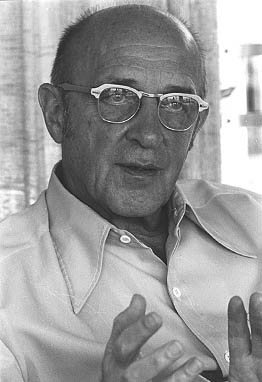
Albert Ellis (Psychologist) – Biography

By:  Kimberly Swanson, MS-Psy, CNA
Albert Ellis (Psychologist)

Albert Ellis was a renowned psychologist who launched and created Rational Emotive Behavior Therapy (REBT); which started the movement towards cognitive behavioral therapy (CBT) (Good Therapy, 2015).
Dr. Ellis was born in 1913 in Pittsburgh, Pennsylvania.  He was  not  emotionally close to his parents; he mentioned that his mother struggled with bipolar disorder (Good Therapy, 2015).  Even though Ellis had to face some health issues, he assisted in raising his younger siblings until he had the opportunity to attend City University of New York.  He earned  a bachelor’s degree in business and later attended  Teachers College at Columbia University where he earned his doctorate in clinical psychology
He later taught at  Rutgers and  New York University. He questioned the reliability of many psychological theories especially Sigmund Freud’s theories of psychoanalysis.    He decided to follow a different path and call  his therapeutic technique Rational Therapy.  Ellis later changed the name to  Rational Emotive Behavioral Therapy (REBT). His therapy technique was not popular at first but now it began to gain more  ground within the field of psychology.  Dr. Ellis  founded the Institute of Rational Living in 1959.
Ellis’s REBT is what lead to the development of CBT.  Instead of looking at early childhood experiences, psychoanalysis, interpreting dreams, or family relationships, REBT targets and focuses in on troubled belief systems which lead to self-destructive behaviors (Good Therapy, 2015). An intricate part of  cognitive therapy is  Ellis’s ABC Technique of Irrational Beliefs (Albert Ellis, 1957).

References
Ellis, A. (1957). Rational Psychotherapy and Individual Psychology. Journal of Individual Psychology, 13: 38-44.
Good Therapy.  (2015).  Albert Ellis (1913-2007).  Retrieved from http://www.goodtherapy.org/famous-psychologists/albert-ellis.html.

 Copyright in 2016 by ©Messenger Publishing, Inc.

How to cite this article:

Swanson, K.  (2016).  Albert Ellis (Psychologist) – Biography   Psychology Essence (Messenger Publishing, Inc.).  Retrieved from http://psychologyessence.blogspot.com/2016/09/albert-ellis-psychologist-biography.html.

Monday, September 12, 2016

Word of the Week - Permutation

Permutation - pərmyo͝oˈtāSH(ə)n/  (Noun) - Tells or shows how many ways a set of items can be numbered or arranged.

Saturday, September 10, 2016

What is Cognitive Behavioral Therapy (CBT)?

By:  Kimberly Swanson, MS-Psy, CNA

Cognitive behavioral therapy (CBT) is an umbrella term that for many types therapeutic approaches that has some similar qualities (McLeod, 2015).  There are two early forms of CBT and they were (McLeod, 2015):
·         Rational Emotive Behavior Therapy (REBT), which was created by  Albert Ellis during the 1950s;
·         Cognitive Therapy, was created by Aaron T. Beck during the 1960’s.
Rational emotional behavior therapy (REBT) is a behavioral technique that blends behavior and cognitive approaches for therapy (Grand Canyon University, 2014).  REBT is used in populations of individuals who have a problem with disputing negative irrational thinking (Grand Canyon University, 2014).  These individuals feel like that they have to be accepted by others in order to have feel self-worth.   They feel that they are the cause of other people’s actions that which causes negative actions.  They put extreme pressure on themselves that may lead to anxiety and depression.
According to Ellis (1999), there are three types of people who may need REBT:
1.            Individuals who put extreme pressure to do well to please others.  And if they do not reach others approvals they feel worthless, which can lead to anxiety, depression and are not asserting themselves.
2.            Individuals believe that people should treat them nice, fairly, and with consideration or they are not bad.  This person tends to hold grudges, get angry, become hostile, and can become violent. 
3.            This is when a person has an expectation when it comes to certain predicaments situations things should be fair, simple, and life should not be filled with struggles.  This mind set is linked to having feelings of no hope, procrastinating, and having addictive behaviors.
The diagnostic mental health categories that would use REBT and behavioral theories are for anxiety, depression and addictions.  The reason why REBT and other behavioral theories would be used is to assist in changing negative or counter-productive behaviors through these therapeutic techniques.

Individual and Cultural Diversity Issues  When using REBT and Other Behavioral Theories.
There are some issues with individuals and cultural diversity when it comes to REBT and cognitive therapy.  According to Pretzer (2013) culture has a wide range of complexity.  The therapist must take into consideration their own cultural background and their client’s cultural background to see if it may affect their working relationship between each other (Pretzer, 2013). 
Pretzer  (2013) mentions that it is important that a counselor understands their client’s dilemmas and situation;  having clarity and being able to relate  regardless of their personal views is very important.  In addition, Pretzer (2013) also states that it is essential for the therapist to have an awareness of their own cultural influence and is able to identify and address them when conducting therapy session with their clients.
References
Ellis, A.  (1999). How to make yourself happy and remarkably less disbursable.  Atascadero, CA:  Impact
Grand Canyon University (2014).  Alternative to classical theories (lecture notes).  Retrieved from https://lc-grad2.gcu.edu
McLeod, S.  (2015).  Cognitive behavioral therapy.  Retrieved from http://www.simplypsychology.org/cognitive-therapy.html
Pretzer, J.  (2013). Cultural differences and cognitive therapy.  Behavior Online.  Retrieved from http://behavior.net/2013/07/cultural-differences-and-cognitive-therapy/.

Copyright in 2016 by ©Messenger Publishing, Inc.

How to cite this article:

Swanson, K.  (2016). What is Cognitive Behavioral Therapy (CBT)?  Psychology Essence (Messenger Publishing, Inc.).  Retrieved from http://psychologyessence.blogspot.com/2016/09/what-is-cognitive-behavioral-therapy-cbt.html.


Thursday, September 1, 2016

Alfred Adler (Physician & Psychotherapist) - Biography

Dr. Alfred Adler (Physician & Psychotherapist)
By:  Kimberly Swanson, MS-Psy, CNA

Dr.  Alfred Alder is the founder of Adlerian psychology which is often times called individual psychology.  In early life, children are very vulnerable; this was observed by Adler and he speculated that humans at the beginning of life feel inferior or insignificant (Ansbacher & Ansbacher, 1956).  According to Adler, family constellations occurs when the family has determines the critical developmental stages of their offspring (Murdock, 2013); this is when the birth order theory came into play with individual psychology (Murdock, 2013)
Adler was born on February 7, 1870 in Vienna, Austria.  Adler was the second oldest of six siblings and was born to an affluent family and grew up in the outskirts of Vienna.  Throughout Adler’s youth, he was ill and it was documented that he felt closer to his father and felt like he was not accepted by this mother (Cosner, 2016).  Even though Alder was not the best student while growing up, he worked hard to excel and later went to college.
In 1888 Alfred, attended the university of Vienna Medical School.  Later he earned his degree in 1895.  Adler opened a private practice in ophthalmology.  In 1898, Alder had two articles published in “Medical News Bulletin”, an Austria’s news publication; that same year, he published his first book which laid the ground work for his theories (Cosner, 2016).

References

Ansbacher, H. & Ansbacher, R.  (Eds).   (1956). The individual psychology of Alfred Adler.  New York:  Basic Books.

Cosner, L.  (2016).  Psyography:  Alfred Adler.  Retrieved from http://faculty.frostburg.edu/mbradley/psyography/alfredadler.html

Murdock, N.L.  (2013). Theories of counseling & psychotherapy (3rd ed.).  Upper Saddle River, NJ:  Pearson.

Copyright in 2016 by ©Messenger Publishing, Inc.

How to cite this article:

Swanson, K.  (2016).  Alfred Adler (Physician & Psychotherapist) - Biography.  Psychology Essence (Messenger Publishing, Inc.).  Retrieved from http://psychologyessence.blogspot.com/2016/09/alfred-adler-physician-psychotherapist.html.

Tuesday, August 30, 2016

Alfred Adler's Theory of Psychological Birth Order (Family Constellation)


By:  Kimberly Swanson, MS-Psy, CNA
According to Adler, the sequence in a person’s life is developed by the age of five (Murdock, 2013).  This is due to genetics and a person’s upbringing and surroundings, personal outlook and lifestyle is molded during the earlier years of life and it is very hard to alter (Adler, 1929/1965).  In early life, children are very vulnerable; this was observed by Adler and he speculated that humans at the beginning of life feel inferior or insignificant (Ansbacher & Ansbacher, 1956).
Family constellations occurs when the family has determines the critical developmental stages of their offspring (Murdock, 2013); this is when the birth order theory comes into play with individual psychology (Murdock, 2013).  The biological order is the order in which a child is born among their siblings and the psychological birth order is how the biological order affects the child’s outlook, behaviors and outcomes in life.

According to Murdock (2013), the first child is usually the ones who get the most parental attention and usually they interact well with adults.  But when the second child is born, the first usually feel that they have lost some of the attention (dethroned) (Adler, 1927/1969). Often times, the oldest are held responsible or have to look after the younger siblings. When the oldest child becomes an adult, they tend to like authoritative roles in jobs or in positions. The middle child often times feel like they are sandwiched or squeezed in the middle, whereas the youngest child gets the center of attention (Murdock, 2013).

References
Adler, A.  (1969). The science of living (H.L. Ansbacher & R.R. Ansbacher, eds. & Trans).  New York:  Doubleday.  (Original work published 1929). 
Ansbacher, H. & Ansbacher, R.  (Eds).   (1956). The individual psychology of Alfred Adler.  New York:  Basic Books.
Murdock, N.L.  (2013). Theories of counseling & psychotherapy (3rd ed.).  Upper Saddle River, NJ:  Pearson.
Copyright in 2016 by ©Messenger Publishing, Inc.

Wednesday, August 24, 2016

Carl Rogers (Psychologist) - Biography

By Kimberly Swanson, M.S.- PSY, CNA
Dr. Carl Rogers (Psychologist)
In 1902, Rogers was born in Oak Park, Illinois.  Dr. Rogers received his B.A. from the University of Wisconsin in 1924, a M.A. from Columbia University in 1928, and his Ph.D. in psychotherapy from Columbia University in 1931 (Hall, 1997).  In 1940, Rogers became a professor at Ohio State University where he taught psychology and remained until 1945. He then transferred to the University of Chicago in 1945 where he served as the professor of psychology and the executive secretary at the Counseling Center (Hall, 1997). In 1957, he worked at the University of Wisconsin in the school of psychology and psychiatry.  He later continued to work at various colleges and universities.
Carl Rogers is a psychologist who has written 16 books and several articles on human personality (Journal Psyche, 2015).  Rogers developed techniques which reshaped therapy dynamics.  In traditional setting, the therapeutic relationships were based on the ideologies and principles of psychologists such as Freud and others; their ideologies suggested that that psychotherapist guides the patient and the patient follows the doctor’s lead (Journal Psyche, 2015).  American psychotherapist, Carl Rogers, created the non-directive, client-centered, technique to therapy, which emphasized person-to person interaction between the psychotherapist and the client (Encyclopedia Britannica, 2016);  the client is the one who makes the decision as to how long the sessions will last for treatments (Encyclopedia Britannica, 2016).
Rogers suggested that the psychologist and patient dynamics would more efficient if there is a mutual understanding between the two.  Rogers expanded his theory to include the theorization of personality learning, cross-cultural relationship, and etc. within the field of counseling and psychology (Journal Psyche, 2015). 

References

Encyclopedia Britannica (2016).  Carl R. Rogers.  Retrieved from https://www.britannica.com/biography/Carl-R-Rogers.

Hall, K.J.  (1997). Carl Rogers.  Retrieved from http://muskingum.edu/~psych/psycweb/history/rogers.htm#Biography.

Journal Psyche.  (2015). Revisiting Carl Rogers Theory of Personality.  Retrieved from http://journalpsyche.org/revisiting-carl-rogers-theory-of-personality/.

Copyright in 2016 by ©Messenger Publishing, Inc.


Saturday, April 30, 2016

Introduction to Freud's Psychoanalysis

By:  Kimberly Swanson, M.S. - PSY, CNA

Sigmund Freud
During the 17th and majority of the 18th century, publications were geared with a “neoclassicist” view in which human behavior is based on religion and it was considered a sin if thought to think  otherwise (Summers, 2011).   They believed that “order and reason” was needed to control human thoughts especially when it came to science and the birth of, psychology, the science of the mind (Summers, 2011).   

In 1879, Wilhelm Wundt opened the first psychology lab at the University of Leipzig in Germany. Psychology as is relatively new science that is growing and is constantly evolving.   During psychology’s evolution, it produced many branches of studies and approaches to the field such as Wundtian Psychology, Titchenerian structuralism, and functional psychology.  Then the it changed into Gestalt Psychology which was for those who opposed Wundtian Psychology.   Right around the same time of Gestalt psychology, a new approach was being developed and that was psychoanalysis.  Psychoanalysis was developed by Sigmund Freud from Freiberg, Moravia which is now Pribor, Czech Republic.

Psychoanalysis was founded by Sigmund Freud in 1895 which was marked by the publishing of his first book, Studies in Hysteria.  Freud’s psychoanalysis is based on his personality traits and theories, concept of analyzing/interpreting dreams to explain what is going on in the conscious and subconscious mind, and his system of psychotherapy.  His concept of psychoanalysis was what paved his legendary mark into psychological history. Freud’s name is more popular and famous than any other psychological scientist in the past due to his style and approach to analyzing the mind.   His face and name embraces the cover of modern day publications such as Newsweek (2006) and feature stories in The Wall Street Journal (Schultz & Schultz, 2012).

References

Schultz, D.P., & Schultz, S.E. (2012). Philosophical influences on psychology (10th Eds.), A History of Modern Psychology (pp. 65-86) Belmont, CA: Wadsworth Press.

Summers, F., (2011).  Psychoanalysis: Romantic, not wild.  Psychoanalytic Psychology, 28(1), p. 13-32. 

Copyright in 2016 by ©Messenger Publishing, Inc.